
Quick Take
- Tribally stands as the first onchain arcade with five hyper-casual games available on desktop and mobile.
- Players stake as little as $0.20 in USDC to chase instant wins up to $3,000, with skill deciding outcomes.
- A three-stage roadmap points toward a user-generated casino where anyone can publish games quickly.
Tribally Games started its journey back in late 2020, dipping into Web3 just as the space began heating up. By April 2021, the team launched Axie Tech, a tool that quickly drew a million users within six months. That momentum led to partnerships with big names like Sky Mavis and Axie Infinity, handling their website and merch store. Those early wins showed Tribally could pull players into games far more effectively than typical tools, setting a foundation for what came next.
Onset of an Onchain Revival
In November 2023, Tribally unveiled a social platform aimed at connecting gamers in the crypto space. It proved its pull by driving user engagement into games at rates hundreds of times better than competitors. Yet, challenges hit hard the following year. A promised funding round for over a million dollars fell through in early 2025, leading to the loss of the entire team and one co-founder. Instead of folding, the remaining creators doubled down, pivoting to rebuild from the ground up.


The comeback centered on transforming Tribally into the world’s first onchain arcade, soft-launched as an MVP in mid-December 2025. It made sense after a closed beta where around 1,000 unique players racked up over 200,000 games played in just two weeks. The cash stakes onchain brought new risks, like changing user habits and potential hacks, so the team monitored everything closely. With no funding left, marketing took a backseat, but the core idea held: skill-based games where good players consistently come out ahead.
Tribally’s Nostalgic Game Lineup
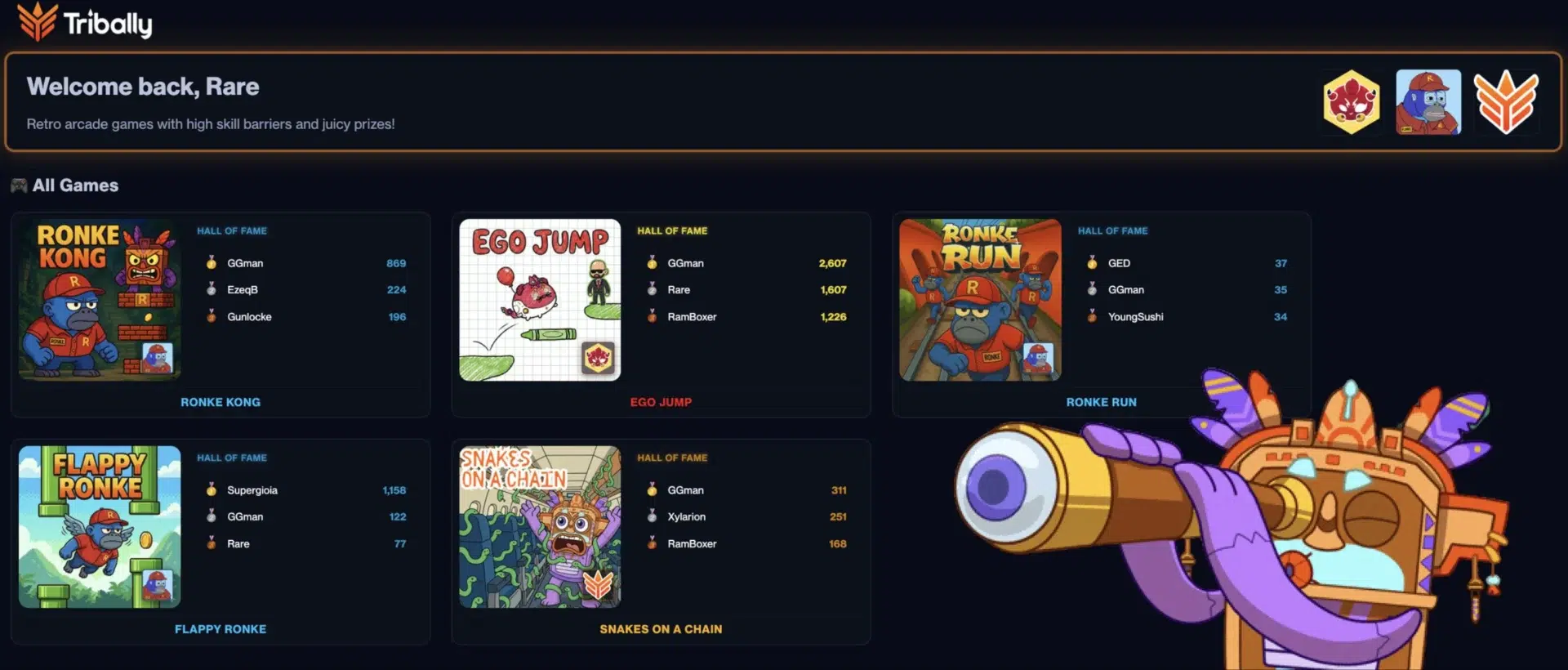
One game captures that retro vibe perfectly through Snakes on a Chain, a blockchain twist on the classic snake everyone remembers from old Nokia phones. Players steer around a square map, grabbing apples and potions for points, but some potions turn deadly, adding a layer of risk that demands quick thinking. It’s simple yet punishing, rewarding those who master the controls without relying on luck.
Collaborations breathe life into other titles, like Ronke Kong, born from a partnership with Ronke on Ronin. Here, players navigate levels to collect coins, take down a Tiki boss, and snag a chest to advance, using basic moves like jumping.
Other games include Flappy Ronke, Ego Jump and Ronke Run which also echo the style of timeless classics.
Road to a Player-Driven Casino
Tribally shows growth potential through achievements like receiving a Ronin Network Lightning Grant to inject another $10,000 into prize pools. The grant allowed for instant wins, jackpots, and the introduction of daily leaderboards starting January 8, 2026. Scores reset at midnight UTC, with top players in rotating games earning prizes, beginning modestly but scaling up. High achievers land in the Hall of Fame, preserving standout performances.
The bigger vision unfolds in a three-stage roadmap toward a user-owned casino. First, the team crafts the games, laying the groundwork seen today. Next, players customize those experiences and earn from them, fostering creativity. Finally, anyone publishes their own games in under ten minutes, democratizing the platform.
Getting started feels effortless: visit the site, connect a wallet like Ronin Wallet or MetaMask, deposit USDC, pick a game, set a stake, and dive in. Quests appear upon loading, offering instant payouts from $50 to $400 if completed, with a $3,000 fund ready for grabs. Luck sometimes strikes, as one player discovered, turning a session into hundreds of dollars in gains.
Tribally’s story highlights resilience in Web3 gaming, where the right teams use setback as fuel for innovations. Does the future promise a world ruled by skill, where players shape the arcade themselves?