

Quick Take
- Adam Fern exits Proof of Play after years pushing Pirate Nation forward.
- He claims Vietnamese players wrecked the game’s economy through token farming.
- Indie Web3 games with less experience thrive where this team stumbled on incentive design.
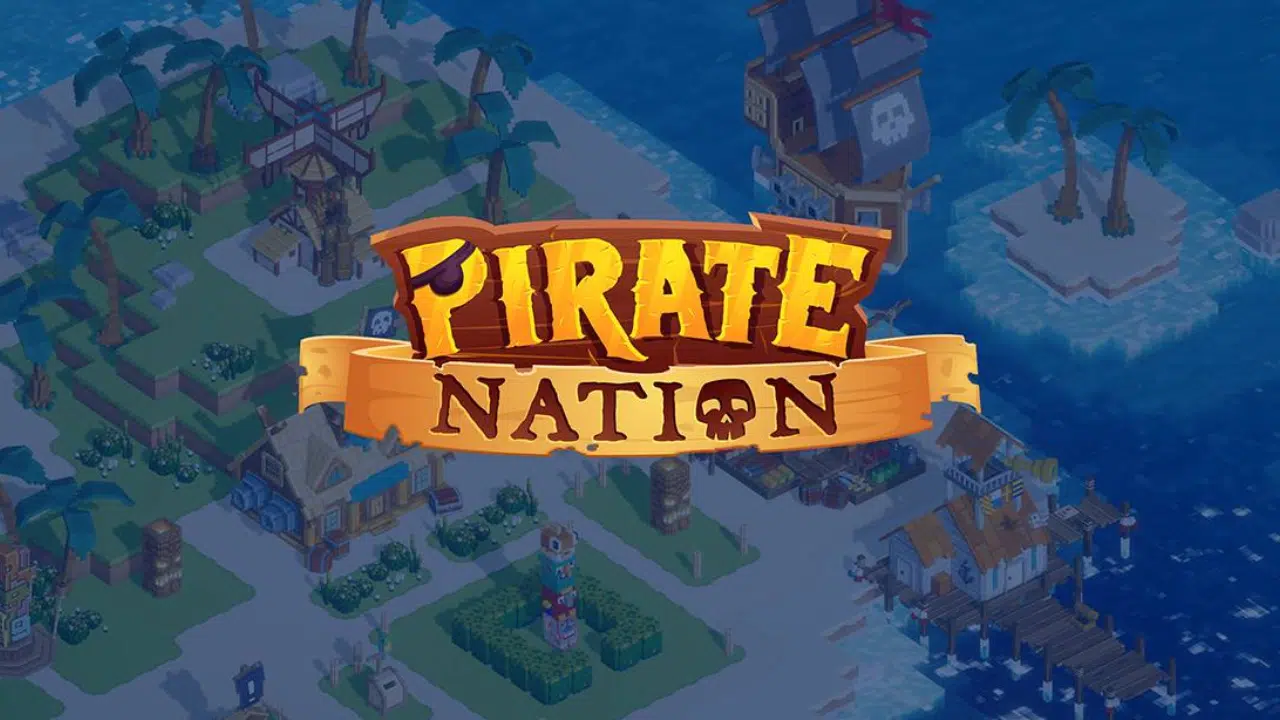
Proof of Play co-founder Adam Fern recently announced his departure, but the explanation came across less as a goodbye and more as a list of achievements from the company, paired with a deflection of blame toward players from another country instead of an honest reckoning with its own mistakes. Pirate Nation, the studio’s flagship Web3 game, had failed to find sustainability, and Fern had thoughts about why. In his post, he pointed to the behavior of the player base and framed the game’s economic collapse as the result of how people chose to interact with it rather than how it was built.

Fern specifically singled out Pirate Nation’s Vietnamese players. In his telling, these players were not really playing the game so much as extracting from it. Anyone who has watched a play-to-earn game unfold has seen this pattern before. When real money is on the line, players will follow the path of least resistance to maximize returns.


The problem is that none of this feels particularly controversial. It just feels off base. Players responding rationally to incentives is not a failure of the community. It is a failure of design. If a game allows extraction to outpace engagement, that is on the studio that built the system. It is the developer’s responsibility to design constraints, sinks, and progression that make long-term play more attractive than short-term farming. Hearing these complaints from a team with Proof of Play’s pedigree makes the disconnect even more glaring.
This is a studio led by Amitt Mahajan, one of the creators of FarmVille, a game that mastered the art of retention, progression, and player motivation at a massive scale. FarmVille reportedly reached over 30 million daily active users, peaking at 32 million DAU according to Zynga’s official history and The New York Times, with other sources citing up to 34.5 million based on 2010 AppData metrics. The game became one of the defining social games of its era. A team behind that should obviously understand how players behave when systems are pushed to their limits. Given that level of history, it is hard not to expect better guardrails, especially in a genre where economic exploitation is not a risk but a certainty.
Proof of Play announced the official shut down Pirate Nation in July 2025. In a post on X, Mahajan was also straight-forward. “Play-to-earn is fundamentally broken,” he said. “We’re done giving tokens away to parties that have no alignment with our long-term success.” The team always projected absolute confidence, but instead of iteration or reform, the conclusion was total rejection of the model.
What makes this ending more complicated is that play-to-earn itself is not entirely dead. Smaller teams and indie developers are finding ways to make adjacent ideas work. Projects like Gigaverse and Cambria, along with a handful of other crypto games, are showing that carefully constrained economies and limited extraction can coexist with player-driven systems. These teams do not have FarmVille money or FarmVille reach, but they are building with an assumption that players will always push boundaries and design their games around what they’ve learned from failure.
Cambria recently concluded its season with nearly $2 million in cash volume spent by and distributed to players. One player alone reportedly walked away with over $50,000 in ETH. Axie Infinity, meanwhile, offers an even longer-running example. As the pioneer of play-to-earn and one of the first games to be hit hard by large-scale extraction, Axie is still standing. In recent activity, its marketplace recorded roughly 213 ETH, or about $710,174, in volume, supported by a resilient community rooted in countries like the Philippines and Vietnam.
Proof of Play had no shortage of precedents to learn from when it came to designing a more durable system.
Proof of Play did not fail because players behaved badly. It failed because the game assumed they would not, or because the team simply did not iterate enough to keep up. In a space defined by incentives and financial gravity, that may have been the most unrealistic design decision of all.